Richard Warren

20thc British art and poetry (mainly), plus bits of my own – "Clearly I tap to you clearly along the plumbing of the world" (W S Graham)

A neglected modernist masterpiece: Terence White’s ‘Irene’

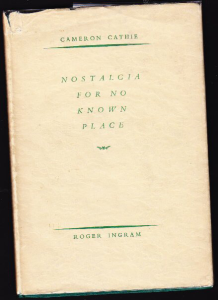
Squashed in among the largely amateurish outpourings of sincerity that bulk out Tambimuttu’s Poetry London X (1944) sit six pages of stand-out writing: an episodic prose poem, surreal, satiric and punctuated by feverish sonnets, that builds into a rolling onslaught of Joycean wordplay. This neglected modernist masterpiece is billed as Terence White’s “Extracts from ‘Irene’”.

This is not the Terence Hanbury White of The Sword in the Stone etc. Nor Terence de Vere White, the Irish novelist. But Terence White (1913-68), aka Terence d’Olbert White, aka Terence White Gervais – musician, composer, music scholar, Associate of the Royal College of Music, logician, film theorist, psychoanalyst, poet in five languages, playwright, translator, artist, Theosophist and flagellant, described by a contemporary as a “small red-faced man with crazy eyes.”

This is the Terence White whose suite for flute and string quartet, performed at the Wigmore Hall in 1956, drew the comment from a Times reviewer that “one movement after another ended with raised eyebrows.”

The Terence White who reportedly declared: “You know I am feminine in my nature and I have always wanted to experience pregnancy myself. I would love to give birth – just a small animal would be enough to be my salute to the universe!”

The Terence White whose Chastisement across the Ages (1956), penned under the suitably dominating name of Gervas d’Olbert, claims to be a “scientific” survey of corporal punishment (“’comprehensive’ might be a more appropriate word than ‘scientific’”, notes one reviewer) and begins thus:

“Amid a world torn and bruised by dissension and misunderstanding of every type, it is a relief to record one human activity which knows no frontiers of race, religion, dialect or epoch. Chastisement is universal …”

And, sadly, the same Terence White who by the mid-‘fifties was obliged to bed down, destitute, in the crypt of St Martin-in-the-Fields.

But what of his organ concerto, of his piano sonatas, of Piscarille, his prose satire in French, of his “large-scale work” After Leonardo: Quality and Quantity for a New Civilisation, of his play about Sappho, or of his long poem in terza rima, “Sylvia Pregnant”, said to have been admired by James Joyce? None of them published, and all apparently lost forever.

But his poems do survive. And thanks to Tambi’s foresight, we do still have “Extracts from ‘Irene’”, though this is clearly excerpted from a longer original work. In case anyone imagines Terence White Gervais to be some sort of invention of mine, I have posted the full text of “Irene” on a page here (or use the tab above), together with a few notes and three related pieces that seem also to have been part of the full work.

There is much to be done before even the basic facts of White’s life and work can be sketched out here. A photo of the man would be a good start! Meanwhile, my thanks to Bill Bennett for sharing the labour of Googling down what we do know. Much more to come, hopefully …

Watching the Megalopolopolis

Pushing into the slanting drizzle that raked the bleak cultural plazas of central Birmingham today, I found my way to Metropolis: reflections on the modern city, on show at the Gas Hall till late June. Here Birmingham and Walsall Galleries show off the “nationally significant Metropolis collection” of “visions of the modern global city by some of the world’s most exciting artists” on which, nudged along by Ikon Gallery, they have splashed their share of the £1 million Art Fund loot.

“The world’s most exciting artists” may be over-egging it a bit, but the dosh has not been entirely wasted. Largely photos and videos, but at least those media have the sheer capacity required to reflect the complexities of an unending urbanism.

I was strangely soothed by Grazia Toderi’s double video projection Orbite Rosse (2009), in which the multi-layered lights of the distant megalopolopolis twinkle and shift benignly; initially pleased by Nicholas Provost’s Storyteller (2011), though on second thoughts merely flipping vertically the moving panoramas of Las Vegas to give a quick impression of intricacy is a bit cheap, to be honest; but fascinated by the slo-mo telephoto multitudes in Beat Streuli’s 2001 video Pallasades. Filming people unguarded at a distance seems to be Struli’s only trick, but at least it’s a good trick. (Though I read recently that the British poet Drummond Allison, killed in 1943, came up around 1941 with the idea of erecting a static camera in the street to film whatever passed, way before Warhol.)

In this show much is “reflected” and “explored” of course, and “issues” are “raised”, as they usually are. But no one’s saying much. And most of it seems so distant and passive: city as backdrop, its image a celebration of our beautiful alienation. Like Iggy Pop’s Passenger, the bus window is as close as we get. So where are the engagements, the détournements, the interventions? Without them, we seem to be stuck in a loop of the same old Ballardian narrative, drifting observers of a decaying urbanism so fixed as to resemble a state of nature …

“Unkind things”: the letters of Kingsley Amis

In a letter to me not long before his death, touching on the role played in the publication of his 1957 collection by poet and novelist John Wain, the poet Gordon Wharton came up with some harsh words for Kingsley Amis, who at that time had moved in the same circles:

“What else? Oh yes, John Wain was lecturing in English at Reading Uni when he was supervising/editing the series in which Errors of Observation appeared … Incidentally, Kingsley Amis absolutely loathed JW, and when John’s sight began to go, he wrote all manner of filthy things to Larkin and/or Conquest. If you can get hold of Amis’s collected letters, you’ll find he has some pretty unkind things to say about me, too. Never retracted, even though I was instrumental in earning him quite a lot of money on the Third Programme. I have postcards and letters from him nagging about money: how much, how soon and how often. Despite all his amusing ways and books, he was a pig!”

amis lettersSo just how unkind was Amis? Picking through The Letters of Kingsley Amis (a volume the size of a small breezeblock), we find that he would probably have been in the same room as Wharton at the January 1953 launch of G S Fraser’s Springtime anthology, in which they were both represented, but didn’t make contact for 18 months, until they met to discuss George Hartley’s Listen magazine, with which Wharton had been involved. In July 1954 Amis wrote to Philip Larkin:

“Had a good jaunt in London the other week. I met Gordon Wharton, a funny little chap with a cockney accent like mine … who looked about 14 and nice but has a wife and kid. When he wasn’t taking TWENTY MINUTES to tell me that ‘it’s a long way to tip a raree’ story in a bad Irish accent, or NEARLY STARTING FIGHTS at Leicester Sq Underground by ‘pretending to be drunk’ and lurching into negroes shouting , etc., he was telling me that LISTEN should have been out, was coming out, on 14th June, but he HASN’T HEARD ANYTHING ABOUT IT FOR WEEKS fuck and burgher. It seems that he’s turned it all over to Geo H[artley].”

Gordon (unlike Amis) didn’t have a racist bone in his body, so the suggestion that he deliberately provoked black people is unfortunate. His grandmother was Irish, and he collaborated poetically with Patrick Galvin, so the Irish accent may have been better than suggested. Amis (lower middle class) had some sensitivities with regard to social status, so for “cockney accent” read “self-educated working class intellectual”. At least they seem to have parted friends. But six months later Amis put the knife in well and truly, in his advice of January 1955 to Robert Conquest on the latter’s choice for his “Movement” anthology, New Lines:

“Your provisional list seems unexceptionable to me. About the 4 fresh people you name, my judgements (for what they’re worth) are:

Gordon Wharton: Snap judgement on what I’ve seen (not much):

P.P.P. (pretty pisspoor)

Though amiable and far from spineless”

On that casual basis Wharton was excluded from New Lines. By April 1956 this “amiable” man had become “that idiot Gordon Wharton.” In October of the same year Amis and Wharton appeared together, alongside Bernard Bergonzi and Geoffrey Warnock, on a Third Programme poetry discussion, The Moral Element. Amis was worried that he “sounded rather a ponce, but … less of a South Kensington coffee-party ponce than Wharton …”

How much of this abuse was also to the face? Or was it saved up for letters to chum Larkin? Much later, in October 1985, Amis commented to Larkin on John Wain:

“What was all that about him going blind a few years ago? Result of meths-drinking to save on drink bills? Or an excuse for his difficulties with the printed word, inability to find his way to the bar, trouble seeing what’s staring him in the face, etc. Takes me back over the years to the afternoon he read me bits of HoD [Hurry on Down] and I was filled with despair because I thought it sounded exactly like crap, which of course it couldn’t be.”

Twenty two years before he had written to Wain himself:

“I thoroughly enjoyed Hurry on Down and read it whenever I had a free moment till I’d finished it. It is very funny in parts and does succeed above all in getting across a grotesque and twisted view of life … I think a few parts are over-written: my only complaint.”

Similar treatment is dealt out to countless others in Amis’s 1200 pages of accumulating vituperation. The reader quickly grows tired of the mannered abuse, the fixed adolescent tone, the relentless “urine”, “bum”, “turdy” and so on, the sad efforts at pornography featuring 14 year old lesbians, the nudie pics enclosed to Larkin, the casual put-downs of women, blacks, Jews.

No doubt it’s been said many times before, but however much of a soft spot one retains for Lucky Jim,  it’s still immensely sad and sobering to follow the steady collapse of this overblown schoolboy with radical inclinations into the ageing, boorish (and boring) reactionary, his gratuitous offensiveness the only remaining echo of an original and authentic dissent. Sad, but somehow oh-so-British.

Or is this an instance of the problem of a particular type of literary personality, one who finds it possible to be humane only in a fictional setting? What kind of dislocated soul is it that mistakes the habit of insult for the discipline of right judgement? And what might this tell us about the urge to write and the yearning for compensation?

Pukka dreams: Christopher Wood & Cedric Morris

Here’s a recent impulse buy I don’t regret: Cedric Morris & Christopher Wood. A Forgotten Friendship, by Nathaniel Hepburn, published last year to accompany a show of the two that tours till this June.

Wood by Wood

Wood by Wood

I hadn’t really noticed the connection between Christopher Wood (self-taught painter and opium smoker, who threw himself under an incoming train at Salisbury railway station in 1930) and Cedric Morris (self-taught painter and Bright Young Baronet, who, with his lifelong partner Arthur Lett-Haines, went on to found the East Anglian School of Painting and Drawing, only to have it burned down in 1939 by the young Lucian Freud). But when you set their work side by side, as in these pages, the likeness becomes obvious.

And instructive. Both men espoused a fashionable naivety of style, and at first glance the similarities shout. Yet on closer inspection we may feel that Morris can’t have had to work too hard at becoming a naïf, being basically a rich boy who couldn’t draw too well to begin with – a sort of upper class Outsider. But Wood had to unlearn earlier sophistications, and it’s Wood who comes out on top here. Morris’s world is the real world minus some element of the real that he never quite mastered; Wood’s world is the real world but somehow wonderfully reordered and recreated.

Morris by Morris

Morris by Morris

Wyndham Lewis knew Kit Wood well, remembering him as “a sixfooter who … camped in my garden”, and estimating him as “the only ‘post-war’ English painter of outstanding merit.” In my piece on Lewis’s The Apes of God, in the Wyndham Lewis Annual for 2008, I argue for Wood as the inspiration for that novel’s naïf “genius” Dan Boleyn. But unlike Boleyn, as Lewis recognised, Wood’s “romantic nature was able to organize itself sufficiently to get something out of paint. His pictures have imaginative beauty which is as easy as a reverie and it does not put you under duress like a nightmare. It is the gentle dream of a dairymaid. But it is a pukka dream.”

Lewis had encountered Morris. Did he find Morris’s dream pukka? I’m not sure.

Nathaniel Hepburn has researched the doings of Wood and Morris’s artistic and social set in painstaking detail, and his book is a welcome addition to the Wood corpus – lavishly illustrated and already available online for considerably less than the headline price. Hepburn is curator of Mascalls Gallery, a proper public gallery housed at a Kent comprehensive. In these times of cultural austerity, as Gove batters the breath out of the curriculum with his nasty little Ebacc, just how good is that?

Speaking of schools, I’m struck by the strong parallels between the cult of the naïve, the minimal tuition at the Paris “academies” frequented by Wood and Morris, the laissez-faire regime of Morris and Lett-Haines’s East Anglian School, and the strictly hands-off approach to art education pioneered at Dudley in the ‘twenties by Marion Richardson (with the approval of Roger Fry). Richardson aimed to preserve adolescent direct expressiveness at the cost of any kind of instruction, and hers became the dominant model of school art well into the ‘sixties, eventually being superseded in many schools only by a belated sub-Bauhaus approach. My grammar school Art master would sooner have shot himself than have been caught actually teaching me anything, but that’s maybe a topic for another time …

Letting Go of Uncertainty: Damien Hirst at Walsall

A trip to Walsall yesterday for a running repair to my hearing aids gave an opportunity to drop in at the New Art Gallery (after a jumbo hot dog from the Mr Sizzle van outside – “Lunch for £1”) to take a look at Damien Hirst’s year long intervention in the Garman Ryan collection. (Only six months to go …)

Sacred Heart

Sacred Heart

Young Damien has seriously knuckled under to the current vogue for “curation”, and is left with little to do but arrange readymades – anatomical models, sea shells – on shelves. He has become essentially a collector of pills, butterflies and other curiosities, which has always been his real vocation, I suppose. His ideal job would probably be in a small museum, except that museums no longer consist of shelves of objects or cases of stuffed animals, having been stripped down to big graphics and interactive doodahs. The museum that Hirst, Cornelia Parker and others yearn to re-create is a childhood memory of a museum – a museum of museums.

Wounds of Christ

Wounds of Christ

At the same time, Hirst seems completely unable to let go of the Christian iconography that he constantly references, whether in his New Religion series (especially the superbly beautiful The Sacred Heart of Jesus and the surprisingly reverential The Wounds of Christ) or in his formaldehyded lost sheep or Lamb of God (Away from the Flock). The former are not at Walsall, but the sheep, looking a little off colour, is there to greet the visitor. Hirst may imagine that he’s critiquing, kitsching or pastiching Christianity in a naughty boy way, but we know better. Whatever his intentions, such images don’t debase the Christian narrative – they revive and inculturate it. I’ll give it ten years maximum for Sir Damien OBE to convert into a practising Roman Catholic.

Meanwhile, upstairs, a dozen Walsall College students, under the banner of “Let Go of Certainty,” have been roped in to “curate” a roomful of vaguely Hirst-themed pieces about life, death, er, the universe and stuff, drawn from the permanent collection. They’ve chosen quite well, but good grief, what’s this “Certainty” they want us to let go of? We’ve all lived with paradox and multi-POV ambiguity for so long now that no one can remember what certainty was. I’m afraid they’re well behind the curve here. What we want today is freedom from Uncertainty.

Enough of “convergences”, of art that “explores”, “is concerned with” or “makes reference to”. Enough squishy flux. Enough indifference. Enough cheap grace. Enough of this post-modern timelessness that is merely the commodification of Eternity.

We’re in need of the hardness of ice, of dogma, of direct touch: Pain, Holy Defiance in the face of tragic extra-personal reality, Mystery, Sacrament, Redemption, the Terrible Beauty of Resurrection, the Hope of Anarchy. And other things that seem to demand Capital Letters.

Speaking of capital letters, the Walsall Gallery is STILL in thrall to the parasitic resident interventions of “Bob and Roberta Smith” (Patrick Brill) that clutter the Garman Ryan rooms. His most recent reflection on the Epstein Archive is an insulting and slatternly “sculpture” of Epstein’s son, the painter Theodore Garman, whacked together in five minutes out of offcuts of firewood, and resembling neither Theo Garman nor anything that might qualify as sculpture. When Jacob Epstein confronts Mr Brill in the afterlife, he will probably want to kick his bottom for this.

The Daughters of Albion weep

How suffocating the weight of their ceremonial, of gold braid, of power, of money.

How revealing of their values, the identities of the select: Sir Mark, Fergie, Clarkson, Wogan, Joan Collins, Jeffrey Archer.

How right they are to mourn their Joan of Arc, who managed their counter-revolution.

How easily it drops away, the thin pretence of one nation. How shameful today to be British.

Among a baffled Broad Left audience at Sheffield University in the mid ‘seventies, I listened as Keith Joseph of the Centre for Policy Studies, Thatcher’s John the Baptist, expounded her gospel of privatisation and monetarism – a speech he made 150 times in his tour of colleges and universities. He became intensely emotional as he dwelt on the virtues of entrepreneurship:

“I say ‘entrepreneur’,” he explained, “as there is no other term that quite conveys what it means to take risks to make money.”

“How about ‘criminal’?” I heckled, feeling quite pleased with myself.

He was not phased for a moment. The writing was on the wall.

Proem to nothing: the poetry of Arthur Llewellyn Basham

The Sunday Referee may not be Britain’s best remembered weekly, but for a while in the ‘thirties it ran a “Poet’s Corner” hosted by the eccentrically ‘nineties figure of Victor Neuberg, perhaps himself best remembered as an early magickal collaborator with Aleister Crowley. Six monthly the Referee sponsored a first collection. First winner was Pamela Hansford Johnson, girlfriend of Dylan Thomas, later a novelist and academic and to marry C P Snow. The second recipient was young Dylan himself, his 18 Poems (Parton Press) quickly a sell-out, followed in 1935 by Proem (Unicorn Press) by Arthur Llewellyn Basham. Arthur who?

BashamBasham, born in 1914, was a talented young man – an accomplished writer and pianist who later had a notable career as an orientalist, best remembered for his encyclopaedic The Wonder That Was India of 1954. He died in 1986. His brief ‘thirties flaring of poetic fame was soon extinguished; he must have decided that poetry was not his career choice. But his poems are not forgettable scrap; a few are well worth picking out of history’s dustbin for a bit of a brush down.

Neuberg’s verbally ornate introduction to Proem explains next to nothing: “unlimited versatility … marvellously extensive … epicurean tongue … has lived vitally” etc. But he does claim Basham as a modernist of sorts: “modern without eccentricity … wholly a son of his century.” Though Neuberg also implies an agricultural focus, referencing Basham’s “great love … for the soil and peasantry of his adopted Suffolk” and “new … panegyrics to old furrows”, in fact hardly any of the poems touch on soil or peasantry. A slightly limp frontispiece portrait shows Basham as a beardless and sensitive youth.

Despite Neuberg’s judgement, Proem is not whole heartedly twentieth century. There are Yeatsian and moralistic throwbacks; “Symbol”, the poem that actually won Basham the Referee Book Prize, is indeed cloyingly and annoyingly symbolist, with its wingclipped horses, dim forms rising and stars glancing in fallen oceans – all without redeeming irony. But when the healthy influence of Auden asserts itself, Basham lurches into the twentieth century with a vengeance, producing some vigorous urban writing that is not entirely derivative and that surely deserves a small corner in any ‘thirties canon.

Some of his early-Audenisms are not helpful; syntax can be baffling, and some obscurities simply don’t stand up. Few pieces are entirely right. But try the opening stanza of “Vestiges of a Pleasant Evening” (which later dips into moralising over a copulating couple):

Notice the spider hurrying,
the cigarette carton in the levelled grass.
Here as it stirs intently in the dust
conceive diminuendo of an evening,
the fatuous stars.

The Audenesque injunctives (“Notice, conceive”); the anti-romantic pairing of “fatuous stars”; the key image of the discarded cigarette packet: all these signify the modern, loudly and effectively.

Or take the heavy materialism of the rather fine first section of “The Garage”:

As yellow as the metal plates
placarding red-encircled walls,
proclaiming tyres or gasoline,
light from the silver arc-lamp falls,
where corrugated iron and tin
with inscribed globes, in a grey dusk,
pump the new year’s heart blood in
to metal arteries, that thud
and spread narcotic musk.

Yellow, red, silver, grey, iron, tin, metal, tyres, gasoline, lamp, thud, spread – all excitingly celebratory and physical, before, once again, the poem tail-ends in symbolising and judgement.

In “Holiday”, the nice young middle class poet explores, to his own cost, his ambivalent and uneasy relations with proletarian youth along a promenade “strewn with woodbine ends”. (Basham has a thing about “gaudy seaside towns”.) The poem is marginally spoiled by a friendly but unpleasant use of the term “Jewboy”, but it touches some interesting nerves along the way:

I say: “But Paolo and Francesca
vortexed in such a crowd as this.
I am one who has known Hell,
so tell me, Lever, what there is to tell
of between last week and to-morrow, when you sit
for the final time on the beach at night, or lie
unsleeping in lodgings.”

A face, pitted like corroded rock,
opens on Avernus, grey with smoke and slime:
“You’re talking poppycock!”
She winks an eye gleaming like molten lead:
“We’ve had a gorgeous time” she confesses as they pass.

 “Deep Sea” gives a surprisingly tough, sailor’s view of Manila, like an Edward Burra painting of a dockside dive:

… gramophones strike up as business starts.
Behind the hills the lightning threads and stitches.
The Filipino girls are warm as hell,
but mind your step, they’re vicious little tarts -
knife you as soon as look at you, the bitches.

“Meditation in the Park”, an extended panorama of Audenesque modern life, is perhaps Basham’s best piece in his Modern mode. It is not totally even, but many passages carry real impact:

Chimneys and masts swagger below the park.
Half-hearted statements
about the nation’s prosperous peak
flap from the factory flags.
Above, the reservoir broods among allotments
mating a single spire to bleed the sky …

… These are the flustered, the industrious weeks
when boarding house keepers burnish their apartments,
lay in new store of linen.
The spring winds, north this year, unload their soot
on cinemas and beaches of the south,
and worry matrons through their sinister nights,
distraught with sirens, and clatter of ribald bells.

The poem rounds off with an incantatory call to action, not overtly party-faithful as in Auden’s “Brothers, who when the sirens roar”, but comparably anti-capitalist and apocalyptic:

You young men on corners, salt-rusted sailors,
ribald in dockside bars,
time to quit your pintpots, your dog-eared cards.
Purseproud forces, essentials of corruption,
all the gloved powers are marshalling their jailers;
the black ensign darkens their yards …

… Girls cycling from factories, riveting mechanics,
an hour forget the power-loom, drop the mask and welder.
Remember the gas-drill, the artificial panics.
Imagine the air turn sour.

The times are in a hurry, you must do more than worry
if you want to save your skins and your houses.
Get going with that city and don’t waste time on pity,
come to grips with the critical hour.

This is good stuff, and Basham’s vision of the just city – “one candid in the sun … clean as a canine tooth” – may even anticipate that of Auden.

One Audenesque element that I have touched on already in my post on Wargaming with WHA is the uncanny anticipation of civil war or invasion:

They are surveying the coast already, sounding the defences,
the strategic importance of the cinema;
plan sandbags on the promenade,
a bombproof shelter under Woolworth’s.

“The strategic importance of the cinema”: with our hindsight neatly boxed in decades, we take such Dad’s Army touches for granted. But given that this was almost certainly written in 1934 or earlier, while the Spanish Civil War started in 1936, and the Japanese invaded China the following year, what precisely generated this fear of invasion, this undercurrent of prophetic imagery of gas drills and sweeping bombers? Just the general climate of rearmament?

Grigson seeks a candid opinion

Grigson seeks a candid opinion

Into my copy of Proem was tucked a message, on the back of an Art Trade Press Ltd slip, in the elegant handwriting of combative poetry impresario and critic Geoffrey Grigson. It’s addressed to “Dear Hugh” – perhaps the novelist Hugh Walpole:

“Thank you so much for your well chosen present. Here are some poems with my sincere wishes for Christmas & the New Year.

I should be interested to hear your candid opinion of Basham.

My warmest greetings to your family.”

Why did Grigson seek a “candid opinion”? The tone of his own work is not too far from Basham at times. Did he approve of the Audenisms, or find them ersatz? His New Verse set itself up as a scourge of the sham. Maybe a Grigson review will turn up at some point and shed some light.

In any case, Basham’s collection includes a good half dozen perfectly anthologisable “modern” pieces. They are as worthwhile as many comparable by other hands, and better than some. It’s a pity he didn’t persevere. In the event, Proem proved a preamble to nothing.

A very slight dent: Aerschot Performance Division 1976-9

At the risk of further blog-drift and internet vanity, I’ve put up a new page on the Aerschot Performance Division, a small footnote in the history of UK performance art in the ‘seventies in which I was a small participant – photos, documents, ephemera, some comments from Robert Worby. Very period, gratifyingly black and white, all very lo-tech and Letraset. Mostly personal dribs and drabs, so inevitably a bit unfair to the other participants – but hey …

Aerschot in action. (The writer on the right. Great photo by Denis Doran.)

Aerschot in action. (The writer on the right.
Great photo by Denis Doran.)

So what on earth were we trying to do? Hmm, not quite sure – and yet … Maybe it’s just me, but thirty five years on it all starts to look oddly relevant again. And surprisingly radical. Time perhaps to take up the deadpan dead hand of much current conceptualism, and gently return it to its roots in Dada. Time to rebuild the Theatre of Nerves!

(For collages by Peter Hatton, a fellow member of Aerschot, go here. For a reminiscence of Peter, go here.)

Babylon is fallen, to rise no more!

Easter Day! Yay! Wooo! Babylon is fallen, and He is risen!

There has to be a Greater Narrative, and the Christian narrative of Redemption is the greatest. So we construct our own small narratives, and at a certain point they break through, make contact with the reality of the Thing Itself. What starts in a garden ends in a city, and the City of God is Babylon recreated, made new.

In the car I’ve been listening obsessively to Babylon’s Fallen by The Trumpeteers, which turned up on a cheapo golden age gospel compilation in the wreckage of the HMV Blue Cross sale. It’s on YouTube, here. After about 30 seconds it takes over your brain completely.

Seems to me that this is essentially a survival of the chorus of Babylon is Fallen, a Shaker hymn that went into the four-part shape note (Sacred Harp) repertoire, as revived here:

Tune your harps ye heavenly choirs, shout ye followers of the Lamb.
See the city all on fire, clap your hands and swell the flame.
Now’s the day of compensation, hope of mercy now is o’er.
Babylon is fallen, is fallen, is fallen.
Babylon is fallen, to rise no more.

Though in a ‘seventies beardy folk version by Swan Arcade, it’s claimed that the song originated with the Parliamentarian armies and passed across the Atlantic. Apparently it used to be sung at Sealed Knot re-enactments. If so, it’s impressive that something first sung by the Levellers eventually found its way into the context of deliverance from slavery. Interesting though that while the white version is triumphant, the black version is simply joyful.

The modern Sacred Harp revivals are wonderful, but somehow don’t quite touch the Alan Lomax archive recordings, like this. (Though the image here is out of period, and not of the singers.)  Listen and tremble!

Black magic in the White Country: Michael Ayrton and Aleister Crowley

You can’t venture far into pre-‘fifties Bohemia without bumping into the sad but morbidly fascinating figure of Aleister Crowley, the Great Beast. But is it always the real Crowley that we meet, or an apparition?

Michael Ayrton

Peter Cannon-Brookes’ 1978 monograph on neo-romantic wonder boy, painter and maze-maker Michael Ayrton contains this intriguing allusion:

“During 1941 Michael Ayrton’s friendship with the composer Cecil Gray and the mystical circle including Barnet[sic] Stross, Freda Cavell, James Laver and above all Margery Livingstone[sic], and its links with Alistair[sic] Crowley, began to take on a new significance.”

Beyond a hint at “deeply disturbing elements” in Ayrton’s writing, we’re not told what this “new significance” was, nor what Crowley may have had to do with it. Confidence is not strengthened by the misspelling of three names. (Nor by the possible garbling of a fourth: is “Freda Cavell”, a name I can’t place, an inadvertent blend of Lady Frieda Harris, designer of Crowley’s Thoth tarot, with Edith Cavell, the subject of one of his more offensive articles?)

But how “mystical” was Ayrton’s circle? And how did Crowley fit in? Having ditched my Crowley biographies (and other Crowleyana) some years ago following my liberation from Crowleyanity, I don’t have many references handy, but the other names can be quickly sketched in for now: Cecil Gray, music critic and composer; James Laver, writer, fashion historian, curator at the V&A, and contributor to a 1948 monograph on Ayrton; Marjorie Livingston, clairaudient, psychic writer and lecturer; Dr (later Sir) Barnett Stross, art collector and from 1945 MP for Hanley, one of the “six towns” of the Potteries.

Barnett Stross

Barnett Stross

Ten years after Cannon-Brookes, Malcolm Yorke, in The Spirit of Place, 1988, came up with a  startling claim about Stross:

“[Ayrton] was at this time interested in the occult and may have met, on his Fitzrovian travels, the Great Beast himself, Aleister Crowley, who was by this time past his best … [Crowley] had also been defeated in battles across the ether by the white witch Barnett Stross, MP for Stoke-on-Trent, and inevitably a friend of the Ayrton family. It is impossible at this distance to know how deeply Ayrton took this interest …”

“Doc” Stross, popular family GP, Labour councillor and re-builder of Lidice – a “white witch” engaged in Dennis Wheatley-style astral fisticuffs with the Beast? But by the time we reach Justine Hopkins’ Michael Ayrton: a Biography, 1994, this “may have met” scenario has firmed up alarmingly:

“Cecil [Gray] had known the Great Beast himself, Aleister Crowley, in the days of his power, and on one occasion introduced him to Michael, although the latter was little impressed by the bloated, boastful charlatan that Crowley had become since his fatal experiments in Paris. He was, however, the cause of a confrontation between the Beast and Barnett Stross, GP, MP and white wizard. Hearing through Cecil that Crowley had some particularly inventive and unpleasant devilry in mind he protested violently, and summoned Stross to the battle across the aether with his dark counterpart. Stross apparently triumphed, and Crowley threatened revenge on Michael in no uncertain terms; the fact that no disaster befell him only went to confirm the scepticism which was an essential part of his involvement with the spirit world.”

So Ayrton not only met Crowley, but set Stross against him, and was threatened by Crowley for his pains? In Hopkins’ index Crowley’s first name is spelt as “Alastair”, suggesting Cannon-Brookes as her source. But “battle across the aether” is obviously lifted directly from Yorke. Are the extra bits from a third source, or just a creative embroidering of Yorke’s story?

The Temptation of St Anthony, 1942-3

The Temptation of St Anthony, 1942-3

But it doesn’t stop there. It’s a simple step forward in wishful thinking to have Ayrton not only meeting Crowley but becoming his student. Here’s novelist and art writer Michael Bracewell pronouncing on ‘Magic and Modernity in British Art’ in Tate Etc. 17, Autumn 2009 (my emphasis):

“The Neo-Romantic sensibility had some occasional links to the world of contemporary operational magic; the artist Michael Ayrton, for example, became interested in the occult during the early 1940s and in the writings of Aleister Crowley, “The Great Beast”, who by this time was more of a Fitzrovian casualty and proto-Beat than a persuasive magician.”

The word “Fitzrovian” here may betray Yorke as the inspiration, with “past his best” inflated to “casualty and proto-Beat.” (The Beast as a Beat? I suppose we understand what he means.) Ayrton as Crowleyan was also cemented into the record by Martin Clark of Tate St Ives, interviewed on the occasion of its show ‘The Dark Monarch’ in 2009:

“We know that Michael Ayrton was interested in Aleister Crowley’s writing.”

Do “we know” this? No, we don’t actually, but that doesn’t prevent this “knowledge” from passing into circulation and ending up (inevitably) as a selling point for Ayrtons. The hammer price of The Satyr Disturbed recently doubled its estimate at Sworders auctions with a description that confidently declared (my emphasis):

“During the 1940s, Ayrton became interested in the occult, and specifically in the writings of the magician-mystic, Aleister Crowley.”

The creative slipping-in of “specifically” now makes Ayrton not just a student of Crowley, but a disciple! How much of this has any substance? Anthony Clayton, at his antonine itineraries blog, has previously taken a look at some of it and found it a bit of a magickal bubble. I agree. But behind the hype lurk some interesting connections that do bear scrutiny. Back to the “mystical circle” of Ayrton’s friends …

cecil grayCecil Gray had been a close friend and biographer of suicidal composer and naked motor bike rider Philip Heseltine (Peter Warlock). In her Sword of Wisdom, 1975, surrealist and occultist Ithell Colquhoun confidently lists Warlock among the membership of Crowleyan lodges. So it’s quite possible that Gray had met Crowley through him. Though he is little recognised as a composer, one of Gray’s three operas was The Temptation of St Anthony, composed in 1935-7 to his own libretto based on the novel by Flaubert. My friend Gerald Leach, who has a copy of the score, comments that he uses instrumental ensembles and colours deeply informed by the ancient religious music of Assyria, India, Greece and Israel, which rather suggests a “mystical” intention. In 1942-3 Ayrton produced his own hysterically overwrought painting on this theme, whose inspiration must have been Gray’s opera; Malcolm Yorke associates Ayrton’s occult tendencies with “some quite extreme spiritual crisis being worked through in various studies for The Temptation of St Anthony.

James Laver in 1948

James Laver in 1948

The dilettantism of Ayrton’s friend James Laver also took on some curious directions. To while away wartime train journeys, according to his 1975 Times obituary (republished here), Laver set himself the task of reading every book on occultism in the London Library. His resulting study of Nostradamus was published in 1942, and was the first to identify the “Hister” bits as referring to Hitler. According to T W M van Berkel, Laver’s material fed into a black propaganda brochure on Nostradamus authored in German for the Special Operations Executive by the astrologer Louis de Wohl (who also cast Laver’s horoscope) and printed by Ellic Howe of the Psychological Warfare Executive, himself later a well known chronicler of the Golden Dawn.

In his introduction to Paintings by Michael Ayrton (Grey Walls Press, 1948), while discussing Ayrton’s notable 1945 broadcast on Picasso as a “master of pastiche”, Laver makes this extraordinary comment:

“The Litany of Art, Picasso has recited backwards. Everything he does is à rebours and characterised by the same purposeful distortion. It is the very mark of diabolism, and Picasso is the great black magician of our time – its most typical figure therefore, the equivalent in the world of contemplation of those other black magicians who have laid waste both Europe and the European soul … Ayrton is the first to acknowledge his own debt to Picasso, if it is only a debt to a ‘black magicism’ from whose toils he has escaped but whose methods have given a permanent impress to his own practice.”

Picasso as black magician and Art Nazi? A bit strong, surely. But Laver had diabolism on his mind at the time, having visited the ageing Crowley in his Hastings boarding house the year before, as briefly recounted in his 1963 autobiography. At this high point of English neo-romanticism, art and magic seem to have been all one to Laver:

“… the magicians and occultists of all ages have known that everything that is without is also within. Art therefore comes full circle and returns to the World of Magic from whence it sprung.”

Such airy Neo-platonisms don’t mean too much on close inspection, but they show where Laver was at. As a historian of fashion he is still well regarded, but much of his thinking seems to have emerged from that curious between-the-wars alternative-progressive world of gymnosophy, Co-masonry, the Woodcraft movement and so forth. There are suggestions (as on this forum) that Laver also knew Austin Osman Spare, and that he may have been associated with a coven that met at Chanctonbury Ring on the South Downs during the ‘forties. Maybe, maybe not. But it is worth noting that Ayrton painted a Paul Nash-style view of the Ring in 1946, Track to Chanctonbury (shown here). Laver certainly knew Gerald Gardner through a shared interest in naturism, and contributed a foreword to J L Bracelin’s 1960 biography of the creator of Wicca.

Constant Lambert by Ayrton

Constant Lambert by Ayrton

But what of the alleged white wizard, Barnett Stross MP? In 1944 Ayrton and his close friend the composer Constant Lambert called in on Stross during a visit to the Royal Ballet, then in wartime exile at Stoke-on-Trent. Stross, as quoted by Justine Hopkins, took them to the Great Tip at Hanley:

“… a dumping ground for old shards. Beneath the crockery there is a colony of rats, for when the potters empty and tip into this hole there is often food in the way of bread mixed up with the fragments. I took Michael to see this place one summer evening before dusk, and he saw the rats come up for an airing. Little ones and large ones, brown and badger and some were scabrous…”

The Sleeper in the White Country, 1945

The Sleeper in the White Country, 1945

Ayrton, who found the rest of the Potteries colourless and puritanical, was much taken with the Tip, where, as he recalled, “a million broken cups and saucers make for rats a porcelain Chicago.” The following year he painted a spectral view of the Tip with an unexplained naked man in the foreground. This was titled The White Country, but is listed today as The Sleeper in the White Country, perhaps to distinguish it from a Mintonesque view of the clay dusted Potteries streetscape, The White Country, painted in 1946, and a view of The Tip, Hanley, minus naked figure, of the same year – both shown below.

The “sleeper” at the Tip is very clearly the same person featured in the rather alarming The Sleeper in Flight of 1943 (below), said by Cannon-Brookes to be an image of the young Nicholas Malleson, which I take to mean Dr Nicholas Malleson, later Director of Health Services at the University of London, who in the ‘sixties advocated the legalisation of all hallucinogenic drugs, declaring: “I’ve known many young women I’d rather see take LSD than Billy Graham.” (Young men too, presumably.) Though why is it Malleson at the Tip?

The Tip, Hanley, 1946

The Tip, Hanley, 1946

Whatever his identity, it seems to me that the “Sleeper” may be occupied less in normal dreaming than in astral projection, which could lend some credence to the “white witch” business. Indeed, The Sleeper in the White Country was purchased by Barnett Stross; could the “white” of White Country mean something more than clay dust? The Sleeper may be related to the prone naked figure in The Earthbound of 1944 (below), itself anticipated by the sunbather in Joan in the Fields of the previous year. However the lying man in Earthbound seems not so much asleep as psychically knocked out, recalling Mantegna’s The Bewitched Groom, an image Ayrton could not have failed to know.

The White Country, 1946

The White Country, 1946

I’m sympathetic to Ayrton’s 1946 rallying call, in British Drawings, for “the lyrical, the satiric, the mystical, the romantic and the preoccupation with linear rhythms, which are the bones and basis of our art.” But his own work, however admirable, was not “destined to shape the future of British art,” as Wyndham Lewis had predicted. At times his mannered, arcane, literary quirkiness puts him close to the eccentric illustration of Mervyn Peake, which some of his earlier drawings resemble; no coincidence that Grey Walls Press put out a volume of Peake’s drawings the year after their Ayrton book.

The Sleeper in Flight, 1943

The Sleeper in Flight, 1943

One last small piece of spookiness: in 1952 Ayrton married Elisabeth Balchin, another graduate of the wartime Special Operations Executive. Her first husband, Nigel Balchin, while seconded from the National Institute of Industrial Psychology in 1933 as a consultant to Rowntrees, had personally created an iconic brand of chocolates. You’ve guessed it – ‘Black Magic’ …

The Earthbound, 1944

The Earthbound, 1944

Follow

Get every new post delivered to your Inbox.

Join 90 other followers